First Safe Schools Africa Roundtable convenes decision-makers
17 December 2025
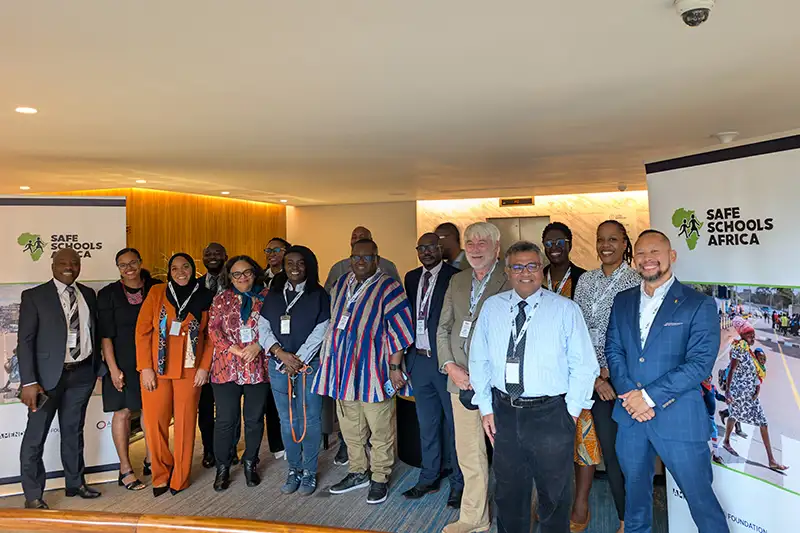
Government agencies, engineering consultants, and development partners from across Sub-Saharan Africa came together for the Safe Schools Africa roundtable convened by Amend and the FIA Foundation in Johannesburg.
The event focused on the opportunities to embed and prioritise road safety for children and other vulnerable road users throughout the life cycle of a road project. Professionals who shape road projects at every stage – from initial identification through construction and evaluation – came together for discussion, practical reflection, and multidisciplinary problem-solving.
Road traffic injury (RTI) is the leading cause of death for children and young people between the ages of 5 and 29 years. Africa has the highest RTI rates in the world, and while other regions have made progress in improving road safety, Africa is the only region in the world where the number of road deaths continues to rise.
The day opened by grounding participants in the everyday realities of African school journeys. A powerful case study from South Africa illustrated the long-term consequences of a road traffic injury involving a six-year-old girl – from prolonged recovery to reduced school engagement and ongoing psychological trauma. The story underscored a core truth behind Safe Schools Africa’s work: road design decisions profoundly shape children’s health, mobility, and access to education.
Amend, and the FIA Foundation’s Child and Youth Director, Atsani Ariobowo, presented an overview of the Safe Schools Africa programme, and how it works with governments and MDB-financed road project teams to integrate child safety systematically into project processes. Key elements included: Demonstration projects that show what safe school zones look like in practice; technical assistance to road projects financed by the World Bank, African Development Bank, and others; capacity building for governments and design teams; and cross-cutting advocacy to influence policy, standards, and long-term institutional practice.
Nine ongoing road projects across Ghana, Mozambique, Tanzania, and Zambia shared brief updates, reflecting growing momentum in adapting road designs to the needs of children and other vulnerable users.
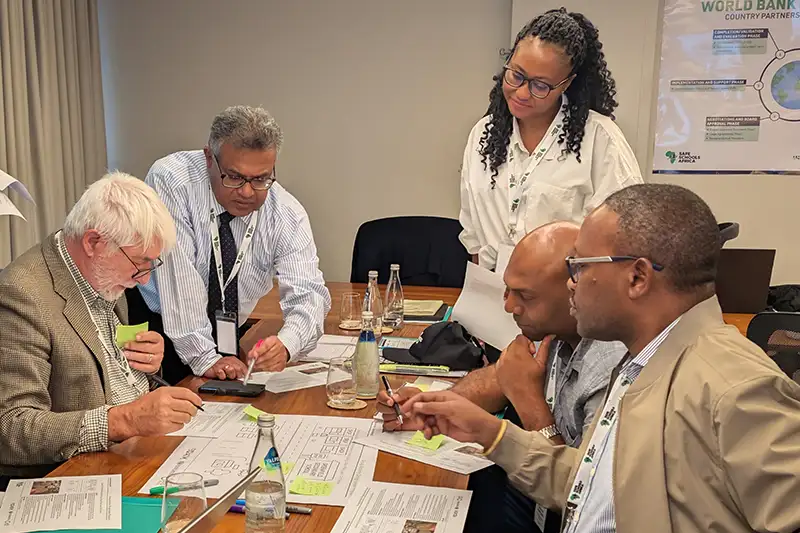
The roundtable also featured practical group work structured around two contrasting school-road environments – a rural highway setting and an urban arterial road. Participants rapidly identified risks, prioritised countermeasures, and debated the trade-offs that design teams encounter when balancing safety, speed, space, and budget.
Atsani Ariobowo, FIA Foundation’s Child and Youth Director, said: “Keeping children safe on our roads starts long before construction begins. It means embedding child safety at the earliest planning stages, making clear safety requirements non-negotiable in project documents, investing in the technical skills to design for vulnerable users, strengthening national guidelines for Safe School Zones, and pairing better infrastructure with strong community engagement. When these priorities come together, road projects can truly deliver safety for children.”
Safe Schools Africa, led by Amend with support from the FIA Foundation and the Agence Française de Développement (AFD), will continue supporting governments, MDBs and technical teams to translate these insights into tangible safety improvements on the ground.